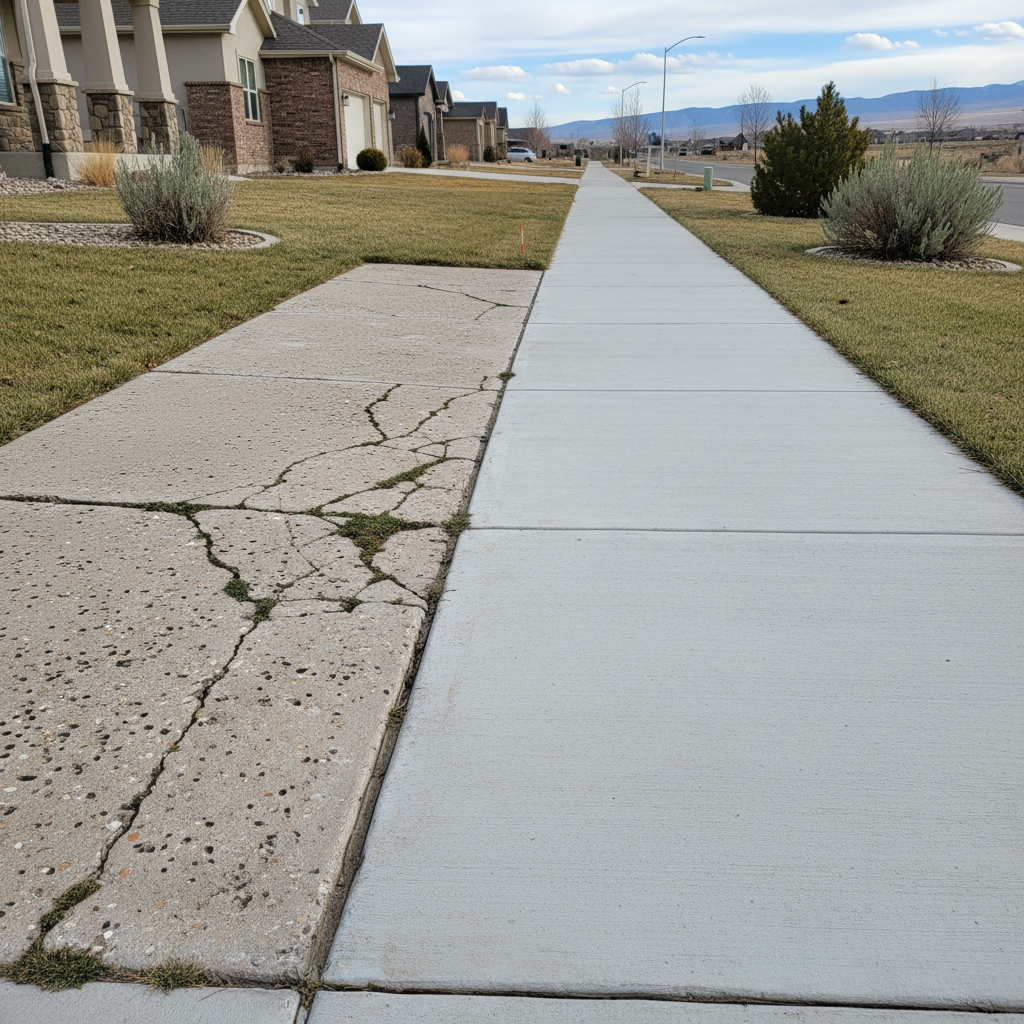
Thinking about putting in a new sidewalk or replacing an old, cracked one? Good. It's one of those things that really impacts your home's curb appeal and safety. Now, when you're talking concrete, most folks just think of that standard gray stuff. But there's another option that's gotten pretty popular: stamped concrete. So, what's the deal, and which one should you go with here in West Jordan?
Plain Gray Concrete: The Workhorse
Let's start with the classic. Plain gray concrete is what you see everywhere, and for good reason. It's the most common, and it's usually the most budget-friendly option up front. You pour it, you finish it, and you've got a solid surface. It's simple, reliable, and gets the job done.
- Cost: This is where plain concrete usually wins. It's less labor-intensive than stamping, so the material and installation costs are generally lower. If you're on a tight budget, this is your go-to.
- Durability: Concrete is tough, plain and simple. When it's mixed right, poured right, and cured properly, it'll stand up to our hot summers and freezing winters here in Utah. The key is proper installation, including good base prep and control joints to manage cracking.
- Maintenance: Pretty low. Keep it clean, maybe power wash it once in a while. You might want to seal it every few years to protect it from stains and extend its life, especially with all the salt and de-icers we use in the winter.
- Appearance: It's... gray. Functional, clean, but not exactly a showstopper. You can broom-finish it for a little texture, but it's not going to mimic natural stone or brick.
Stamped Concrete: The Fancy Option
Now, stamped concrete is a whole different ballgame visually. This is where we pour regular concrete, but before it fully sets, we press patterns into it using large rubber mats. Then, we often add color to make it look like brick, flagstone, wood, or even slate. It's a way to get a high-end look without the high-end price tag of actual stone or pavers.
- Cost: Expect to pay more than plain concrete. The materials are a bit more expensive (color, release agents, sealers), and the labor is significantly higher. It takes more skill and time to get the stamping and coloring just right.
- Durability: It's still concrete underneath, so it's very durable. The main difference is the surface. The patterns and colors are on the top layer, and that layer needs good sealing to protect it.
- Maintenance: A little more involved than plain concrete. You absolutely need to seal stamped concrete, and you'll want to re-seal it every 2-3 years, especially in high-traffic areas or where it's exposed to direct sunlight and our crazy temperature swings. This protects the color and pattern from fading and wear. If you don't seal it, it'll fade and look pretty tired fast.
- Appearance: This is its strong suit. You can achieve some truly beautiful, custom looks. Imagine a walkway that looks like cobblestone leading to your front door, or a patio that mimics natural slate. It really elevates the look of your home and can boost its value.
Which One Should You Choose for West Jordan?
Here's the honest truth from someone who's poured a lot of concrete around here. For most homeowners in West Jordan, especially if you're looking at a standard sidewalk leading to your front door or along the side of your house, plain concrete is often the smart choice.
Why? Our climate is tough on concrete. We get those harsh freeze-thaw cycles, and while stamped concrete is durable, the surface color and pattern are more susceptible to wear and tear if not meticulously maintained. If you're not diligent about re-sealing every couple of years, that beautiful stamped pattern can start to look dull and worn faster than you'd like. I've seen it happen in neighborhoods like the Cobblestone or Copper Hills areas where folks wanted that fancy look but didn't keep up with the sealing.
Plain concrete, when installed correctly by a crew like Kingdom Concrete, is incredibly resilient. It'll handle the snow, the sun, the kids' bikes, and everything else our Utah weather throws at it with minimal fuss. You still want to seal it, but it's less critical for its fundamental appearance than with stamped concrete.
Now, if you're building a new home, or you're doing a major landscaping overhaul and you really want that 'wow' factor for a patio, a pool deck, or a grand entrance walkway, then stamped concrete can be fantastic. Just go into it knowing that you're committing to a bit more maintenance to keep it looking its best. The aesthetic payoff can be huge, but it comes with a trade-off.
My recommendation for most West Jordan sidewalk projects? Stick with good old plain gray concrete. Invest in a quality installation with proper base preparation, rebar or wire mesh, and well-placed control joints. It'll last you decades, look clean, and save you some money and maintenance headaches in the long run. If you're ready to talk about your project, give us a call at Kingdom Concrete. We'll help you figure out the best plan for your home.