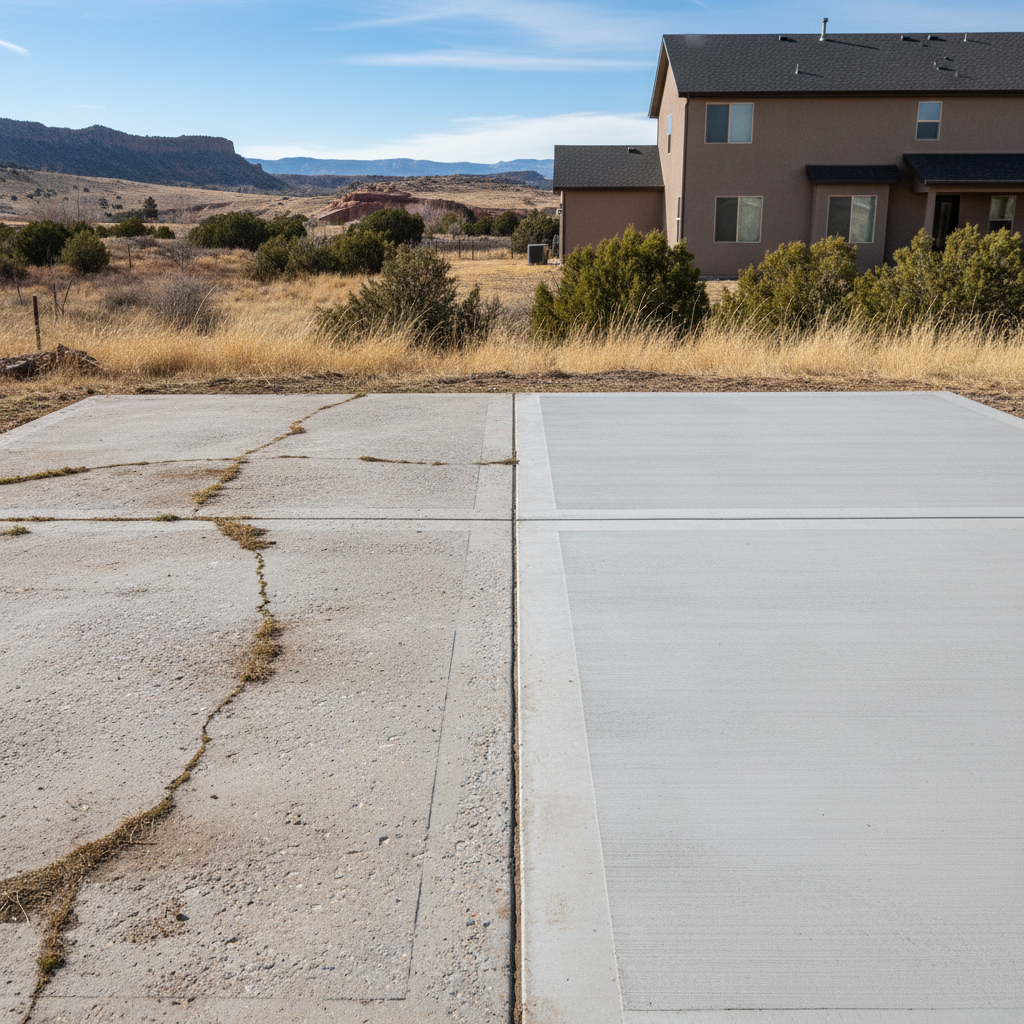
You're putting in a new driveway, patio, or walkway here in West Jordan, right? And you've probably heard a few terms tossed around: rebar, fiber mesh, maybe even wire mesh. It can get confusing fast. You want your concrete to last, especially with our wild Utah weather, so let's talk about the two main ways we reinforce concrete: fiber mesh and rebar.
Fiber Mesh: The 'Invisible' Reinforcement
Fiber mesh is basically a bunch of synthetic or steel fibers. We mix them right into the concrete before we pour it. Think of it like tiny hairs spread throughout the whole slab. It's not something you lay down; it's part of the mix itself.
Pros of Fiber Mesh:
- Better Initial Crack Control: Fiber mesh is really good at cutting down on those tiny, hairline cracks that pop up as concrete dries and shrinks. It helps hold things together at a microscopic level.
- Faster Installation: Since we're not laying out and tying rebar, the pouring process can happen quicker. No extra steps on site, just mix and pour.
- Corrosion Resistant: If you're using synthetic fibers, you won't have to worry about rust. That can be a real problem with steel over time if moisture gets in.
- Uniform Reinforcement: The fibers spread throughout the entire slab, so you get reinforcement in every direction.
Cons of Fiber Mesh:
- Limited Structural Strength: This is the big one, honestly. Fiber mesh is excellent for controlling surface cracking and shrinkage, but it doesn't offer the same structural strength against heavy loads or significant ground movement that rebar does. It's just not designed to carry a load across a void or prevent major cracking from settling.
- Appearance: Sometimes, especially with certain fiber types, you might see tiny fibers sticking out of the surface. It's usually minimal and wears off, but it's something to know about.
Rebar: The Traditional Workhorse
Rebar, or reinforcing bar, is what most folks picture when they think about concrete reinforcement. It's those steel rods we lay out in a grid pattern before the concrete goes in. We lift it up off the ground a bit, so it's suspended within the slab.
Pros of Rebar:
- Superior Structural Strength: This is where rebar really shines. It's built to handle tensile forces, meaning it helps the concrete resist pulling apart, especially under heavy loads or if the ground underneath shifts. If you've got a heavy truck on your driveway or a patio that might settle a bit, rebar is your best bet.
- Spans Voids: If there's a soft spot or a void under your concrete, rebar can help the slab bridge that gap without cracking.
- Long-Term Durability: Properly installed rebar significantly extends the life of concrete by preventing larger, structural cracks.
Cons of Rebar:
- More Labor-Intensive: Laying out, cutting, and tying rebar takes time and skill. This adds to the installation cost and time.
- Placement is Critical: Rebar has to be placed correctly – in the right spot and at the right height within the slab – to actually work. If it's too close to the surface or too low, it just won't do its job.
- Corrosion Risk: Steel can rust if moisture gets into the concrete and reaches the rebar. This can cause the rebar to expand, leading to spalling (flaking) of the concrete.
- Cost: Generally, a rebar-reinforced slab will cost more because of the extra material and labor.
The West Jordan Factor: What We See
Here in West Jordan, especially in areas like Copper Hills or along the benches, we deal with a few things that really push concrete to its limits. We have huge temperature swings – hot summers, freezing winters – which make concrete expand and contract. Plus, depending on your lot, we can have some tricky soil conditions, everything from expansive clays to areas with fill that might settle over time. These factors put a lot of stress on concrete, don't they?
My Recommendation for West Jordan Homeowners
Look, for something like a simple backyard shed foundation that won't see much traffic, fiber mesh might be perfectly fine for basic crack control. It's a decent, cost-effective option for light-duty applications where structural integrity isn't the main concern.
However, for driveways, larger patios, or any concrete that will bear significant weight or is crucial to your home's curb appeal and function, I almost always recommend rebar. The added structural integrity it provides against our freeze-thaw cycles and potential ground movement is just too valuable to skip. You're making an investment, and you want it to last.
At Kingdom Concrete, we've seen firsthand what happens to concrete that isn't adequately reinforced. Those big, ugly cracks aren't just cosmetic; they're structural failures. While fiber mesh helps with the little stuff, rebar is what prevents the big stuff. It's a higher upfront cost, sure, but it's often the difference between a slab that lasts decades and one that needs expensive repairs or replacement much sooner. Think of it as insurance for your concrete.